
1.2.2 The beauty market: a resilient exception amid macroeconomic and geopolitical disruption
Important: the competitive positions and market shares held by the Group's Divisions and brands mentioned in this Document are based on studies, panels and polls obtained from specialised organisations and companies, or, in the absence of comprehensive studies, are the result of estimates made by L'Oréal on the basis of available statistical data.
The beauty market continued to grow in 2025 despite mounting macroeconomic and geopolitical headwinds, confirming its role as a safe haven for consumers. The beauty sector remains especially resilient, propelled by technological innovation and Beauty Tech in particular, along with the increasing customisation of products and services to meet the specific needs of each consumer. This trajectory, combined with sustained demand from younger generations - particularly in Asia - and the emergence of new expectations in terms of authenticity and perceived value, is shaping a market in the midst of transformation.
ESTIMATED CHANGE IN THE GLOBAL BEAUTY MARKET FROM 2002 TO 2025(1)
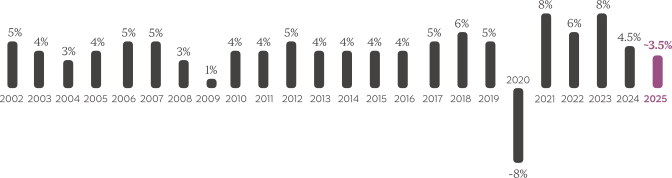
This graph shows the estimated change in the global beauty market from 2002 to 2025(1).
- 2002: 5%
- 2003: 4%
- 2004: 3%
- 2005: 4%
- 2006: 5%
- 2007: 5%
- 2008: 3%
- 2009: 1%
- 2010: 4%
- 2011: 4%
- 2012: 5%
- 2013: 4%
- 2014: 4%
- 2015: 4%
- 2016: 4%
- 2017: 5%
- 2018: 6%
- 2019: 5%
- 2020: -8%
- 2021: 8%
- 2022: 6%
- 2023: 8%
- 2024: 4.5%
- 2025: approximately 3.5%
The beauty market continues to distinguish itself as a dynamic sector, driven by constant innovation and sustained demand for high-quality, high-performing and meaningful products.
Worth some €300 billion in 2025(1), the beauty market has proved resilient, adaptable and prosperous, despite the geopolitical and economic upheaval, establishing itself as a refuge for consumers.
This industry benefits from many key growth drivers, including:
- the increasing global population and the rise of the middle classes in emerging countries(2) ;
- the ageing population in mature markets and the quest for longevity;
- strong growth in emerging markets, driven by young people’s irrepressible appetite for beauty;
- the desire for quality and continued premiumisation combined with readier access to high-performance solutions, making it possible to offer added value at all price levels;
- a dynamic dermocosmetics and Beauty Tech market, positioned at the crossroads of beauty, healthcare and technological innovation; and
- the emergence of greater consumer demand for authenticity, sustainability and ethical commitment.
The beauty consumer always looks for quality and puts a premium on trendy, novel and high-tech products, as well as authenticity and perceived value.